Now Accepting New Patients!

White Spots on Teeth: Causes, Treatment Options, and How to Remove Them


You’re watching your child smile, or you catch a glimpse of your own reflection, and there they are – small, chalky patches that sit right on the enamel and refuse to blend in. White spots on teeth are among the more misunderstood dental concerns, partly because they often look minor but can signal something that warrants attention. They’re not just cosmetic. Depending on the cause, those spots can indicate early mineral loss, developmental changes, or childhood fluoride exposure, and treating them correctly depends entirely on identifying the cause.
For parents, noticing bright white spots on teeth, whether on baby teeth or newly erupted permanent teeth, raises real questions: Is this normal? Will it affect my child’s long-term oral health? What can actually be done about it? This guide works through all of that, clearly and without guesswork.
What Causes White Spots on Teeth?
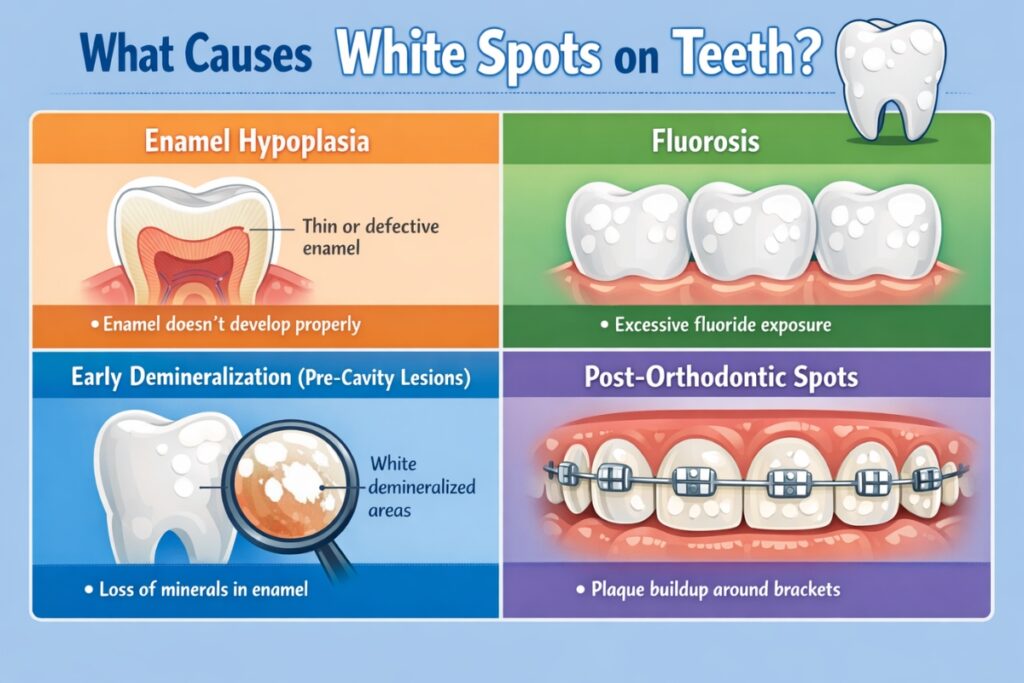
White spots on teeth in adults and children share some common causes, but not all. Knowing the difference matters because it affects how the spots are treated. Several distinct processes can produce the same chalky, opaque appearance:
If you’ve noticed spots on your child’s teeth and aren’t sure what’s behind them, a routine dental cleaning & exam in Washington, DC, under a kids’ dentist can pinpoint the cause quickly, which is the only reliable way to know which treatment, if any, is the right move.
Enamel Hypoplasia
This is a developmental condition in which enamel doesn’t form properly during tooth development. The result is thinner, less mineralized enamel that often shows up as bright white spots, pitting, or grooves on the tooth surface. It can affect baby teeth and permanent teeth alike, and is most often linked to nutritional deficiencies (vitamin D and calcium), illness during early childhood, premature birth, or medications taken during pregnancy or infancy.
Enamel hypoplasia doesn’t resolve on its own, and because the enamel in affected areas is thinner, those spots are more vulnerable to decay than the surrounding tooth structure. For parents of young children, this is one of the more important causes to know about – early identification makes a real difference in prevention.
Fluorosis
Dental fluorosis develops when a child ingests too much fluoride during the years when teeth are forming from birth through age eight. Mild fluorosis presents as faint white streaks or spots. In more significant cases, the discoloration can appear as broader opaque patches or, in severe (and far less common) cases, brown staining and surface pitting.
Fluorosis is worth understanding because it’s almost entirely preventable. The most common contributors are swallowing fluoride toothpaste during early childhood or drinking water with naturally high fluoride levels without adjusting supplementation. It does not affect the health or function of the teeth, but the white spots on teeth that adults notice from childhood fluorosis can persist for life without cosmetic treatment.
Early Demineralization (Pre-Cavity Lesions)
This is probably the most clinically important cause. When plaque builds up on enamel, the acids it produces strip minerals from the tooth surface. The first visible sign of this process is a chalky white spot, also known as a white spot lesion, that appears before any cavity has formed. These spots are soft, porous, and if left untreated, they progress into actual decay.
White spot lesions are common after orthodontic treatment, where brackets can make thorough cleaning difficult. Children who wear braces and don’t brush properly are at risk. The good news: caught early, demineralization can be reversed with the right fluoride and remineralizing products.
Post-Orthodontic Spots
Many teenagers and young adults notice white spots on their teeth when braces come off, and they’re disheartened after months of treatment. These are almost always demineralization lesions that formed around the bracket attachment sites. The shape of the spot often mirrors the outline of the bracket’s position. They vary in severity, and treatment options depend on the extent of mineral loss.
How to Remove White Spots on Teeth: Treatment Options That Work
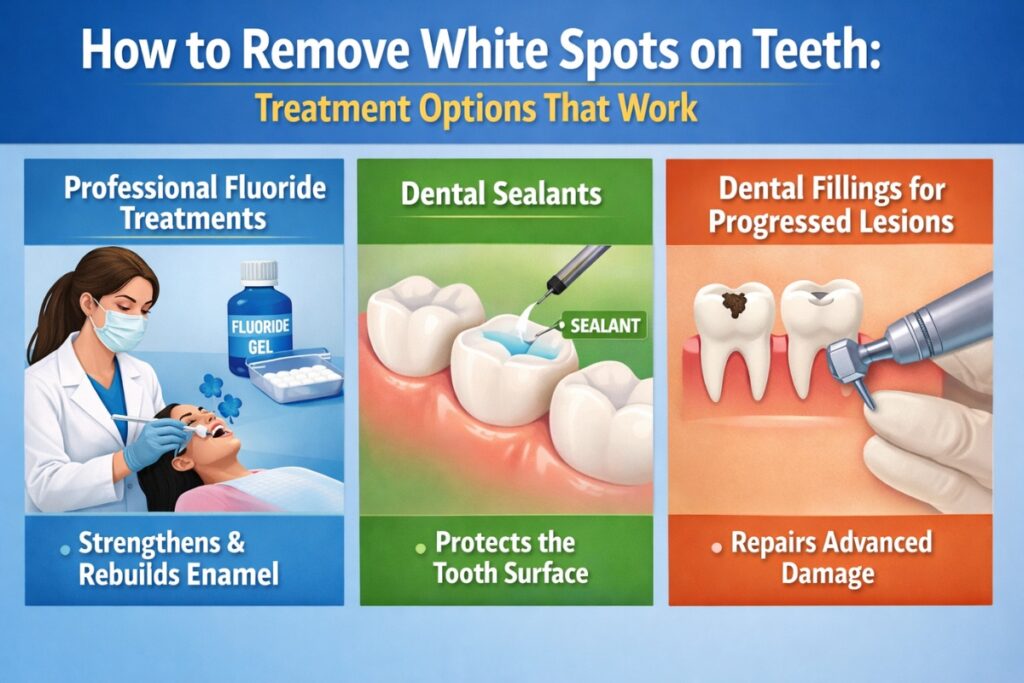
The right approach to removing or reducing white spots depends on what caused them. There’s no single fix, and using the wrong treatment for the wrong cause can waste time and money without improving the appearance. Here’s what actually works:
Professional Fluoride Treatments
For early-stage white spot lesions where the enamel surface is still reasonably intact, professional fluoride applications are often the first line of defense. Fluoride works by reintroducing minerals into weakened enamel through remineralization, which can gradually reduce the spot’s opacity and chalkiness over time. At Capitol Smiles Pediatric Dentistry, fluoride treatments are a routine part of preventive care visits, and for children with active white spot lesions, they can make a meaningful difference when applied consistently at the right concentration.
Dental Sealants
Dental sealants don’t remove white spots, but they play an important role in preventing early demineralization from progressing into something more serious. A sealant is a thin protective coating applied to the chewing surfaces of back teeth, where plaque most easily accumulates. For children who already show signs of early white spot lesions, sealing the most vulnerable teeth buys valuable time and protection while other treatments address the visible changes.
Dental Fillings for Progressed Lesions
A white spot that has been left untreated long enough can break through the enamel surface and become a cavity. At that stage, remineralization is no longer an option – the decayed portion of the tooth needs to be removed and replaced with a tooth-colored dental filling. Modern composite fillings blend closely with natural enamel, restoring both the function and appearance of the tooth. Catching spots before they reach this stage is always preferable, which is why routine cleanings and exams are so important.
White Spots Are Treatable – The Sooner, the Simpler
Whether your child has just come off braces and you’re noticing new spots, the best move you can make is: get a proper diagnosis. White spots on teeth look similar on the surface but require very different approaches depending on their origin. Treating them without knowing the cause is guesswork.
Capitol Smiles in Washington, D.C., offers the full range of pediatric solutions described here. If you’re a parent looking for a pediatric dentist in Washington who can assess your child’s teeth and lay out realistic options, we’re here for exactly that conversation.
Book your child’s appointment at Capitol Smiles today.
Frequently Asked Questions
Are white spots on teeth permanent?
It depends on the cause. Fluorosis spots and enamel hypoplasia won’t fade on their own – they’re structural and require treatment to improve in appearance. Early demineralization lesions can sometimes be reversed with remineralizing treatments if caught before the enamel surface breaks down. Post-orthodontic white spots tend to fade somewhat over time but rarely disappear completely without intervention.
Can whitening treatments make white spots worse?
Yes, this is a real concern. Teeth whitening works by lightening natural enamel, but white spots from fluorosis or hypoplasia don’t respond the same way. The spots may initially appear more prominent after whitening because the surrounding enamel brightens while the affected areas stay the same shade or change differently. This is why whitening is typically done after white spot treatment, not before or not at all, depending on the case.
At what age do white spots from fluorosis become visible?
Fluorosis spots typically become visible when the affected teeth erupt. For front permanent teeth, that’s usually between ages six and eight. Parents often first notice the spots when children are in early elementary school, which is also why regular checkups during those years matter so much for catching and documenting any changes.
Does diet play a role in the development of white spots?
Diet affects white spots in two ways. First, a diet high in sugar and acidic foods accelerates demineralization, increasing the risk of white spot lesions. Second, nutritional deficiencies during early childhood can contribute to enamel hypoplasia. A balanced diet that supports enamel development is one of the most practical preventive steps parents can take.