Now Accepting New Patients!
Bad Breath in Kids: What It Means and How to Fix It During NCDHM

Have you ever noticed your child walking into a room and feeling a little self-conscious about their breath? If you’re a parent, you’ve probably wondered, “Why does my child have bad breath?” While it may seem like a minor issue, bad breath, or halitosis, is actually quite common among kids and can be an indicator of a variety of things. It’s a topic that many parents shy away from, but understanding it is crucial, especially during National Children’s Dental Health Month (NCDHM).
NCDHM is the perfect time to discuss kids’ oral health, particularly bad breath. This month, we’re diving into what causes bad breath, how it affects children’s social life and confidence, and, most importantly, what parents can do to fix it. By the end of this blog, you’ll have actionable steps to improve your child’s breath and make their smile sparkle!
What Causes Bad Breath in Kids?
Poor Oral Hygiene
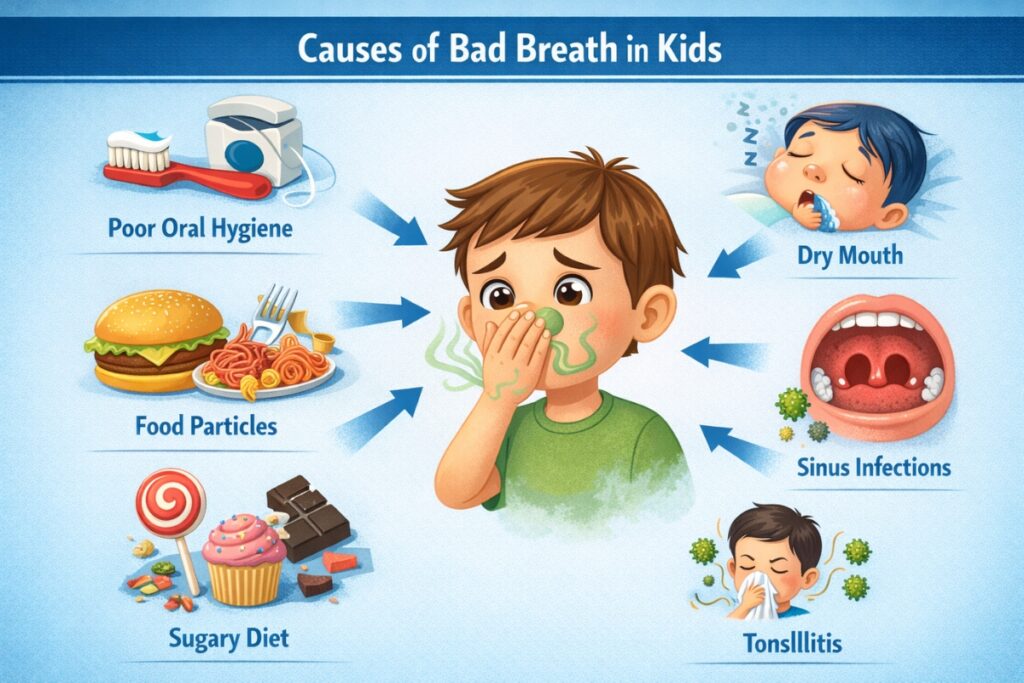
One of the most common causes of bad breath in kids is poor oral hygiene. Kids (and sometimes adults!) may not brush and floss their teeth as consistently or thoroughly as they should.
When food particles and bacteria remain in the mouth, they can cause a buildup of plaque and lead to a stinky odor. If left untreated, this plaque can also lead to tooth decay and gum disease, which will only make the problem worse.
Dietary Choices
What your child eats can have a significant impact on their breath. Foods like garlic, onions, and sugary snacks can leave a lingering smell.
Additionally, sugary foods contribute to plaque buildup in the mouth, which breeds bacteria and contributes to foul odors. To avoid these issues, try to limit the number of sugary snacks your child consumes, especially between meals.
Health Conditions
Bad breath in children can also be linked to underlying health conditions such as allergies, sinus infections, or gastrointestinal issues. If your child has a stuffy nose or a sore throat, they may breathe through their mouth, which can dry out the mouth and lead to bad breath.
Additionally, chronic conditions like acid reflux can cause a sour smell.
Mouth Breathing
Breathing through the mouth, particularly while sleeping, can dry out the mouth and lead to bad breath. This is especially common in kids with allergies or nasal congestion.
When the mouth is dry, it doesn’t produce enough saliva, which helps wash away food particles and bacteria. Without enough saliva, the mouth becomes a breeding ground for odor-causing bacteria.
How Bad Breath Affects Kids
Social Impact
For children, bad breath can have a significant social impact. Kids are often very sensitive about how they’re perceived by their peers, and bad breath can make them feel embarrassed or self-conscious. It may even affect their confidence in social situations, such as at school or during extracurricular activities.
As parents, it’s important to address this issue so your child feels comfortable and confident interacting with others.
Potential Health Concerns
While bad breath may be a temporary issue caused by something as simple as eating certain foods, persistent bad breath could be a sign of a more serious underlying health condition. If your child’s bad breath continues despite good oral hygiene practices, it might indicate problems such as gum disease, tooth decay, or even digestive issues.
It’s essential to pay attention to your child’s breath and consult a professional if the problem persists.
What Parents Can Do to Fix Bad Breath
Good Oral Hygiene Practices
The first step in fixing bad breath is ensuring that your child is practicing good oral hygiene. Encourage brushing their teeth twice a day, flossing daily, and using mouthwash when appropriate.
It’s also helpful to make tooth brushing a fun and interactive activity. Use a colorful toothbrush, play their favorite song, or offer rewards for consistent brushing.
Regular Dental Checkups
Regular dental visits are essential for maintaining your child’s oral health. Not only does this ensure their teeth and gums are healthy, but it also provides an opportunity to catch any potential issues early on.
During National Children’s Dental Health Month, take the time to schedule a dental appointment with Capitol Smiles Pediatric Dentistry of Washington and get your child’s teeth professionally cleaned and checked.
Healthy Diet
Diet plays a significant role in oral health. Encourage a balanced diet with plenty of fruits, vegetables, and water. Avoid sugary snacks and drinks, especially between meals. Sugary foods contribute to plaque buildup, which breeds bacteria that cause bad breath.
A diet rich in fiber and water helps to clean the teeth naturally and keeps the mouth hydrated, reducing bad breath.
Mouth Breathing Solutions
If your child is a mouth breather, particularly at night, it’s important to find the root cause of the issue. This could be due to allergies, nasal congestion, or other respiratory issues.
Helping your child manage their allergies or using saline sprays to clear their nose can prevent mouth breathing. Encourage them to breathe through their nose instead of their mouth, especially while sleeping.
Allergy Management
If allergies are the culprit behind your child’s bad breath, consider managing them with proper medications or treatments recommended by your pediatrician. Reducing nasal congestion can prevent mouth breathing and keep your child’s mouth moist, reducing bad breath.
When to See a Pediatric Dentist
Persistent Bad Breath
If your child’s bad breath persists despite maintaining good oral hygiene and dietary habits, it’s time to see a pediatric dentist in Washington. Persistent bad breath can indicate more serious oral health issues, such as gum disease or cavities. A dentist will be able to assess the situation and recommend appropriate treatment.
Signs of Oral Health Problems
Look for other signs of oral health issues in your child, such as swollen or bleeding gums, tooth sensitivity, or visible cavities. If your child is experiencing any of these symptoms alongside bad breath, it’s important to schedule a dental checkup right away.
At Capitol Smiles Pediatric Dentistry of Washington, we specialize in diagnosing and treating common pediatric dental issues, ensuring your child’s smile stays healthy and bright.
Celebrate NCDHM with Your Child’s Oral Health
NCDHM Tips
National Children’s Dental Health Month is the perfect time to reinforce good oral hygiene habits in your child’s routine. Use this month to schedule a dental visit and teach your child the importance of brushing and flossing. Make brushing fun by singing a toothbrushing song or using fun, kid-friendly dental products.
Encouragement
Reinforce the importance of oral health during NCDHM by making regular dental visits and good oral hygiene practices a part of your child’s routine all year long. By staying on top of your child’s dental care, you can ensure their bright, healthy smile lasts a lifetime.
In conclusion, bad breath in kids is a common issue that can often be fixed with proper oral hygiene, a balanced diet, and regular dental checkups. If your child’s bad breath persists, it may be time to consult a pediatric dentist to ensure there are no underlying health issues.
Take action today by scheduling a dental visit with Capitol Smiles Pediatric Dentistry of Washington and making your child’s oral health a priority during NCDHM.
What People Ask?
What causes bad breath in kids?
Bad breath in kids can be caused by poor oral hygiene, certain foods, mouth breathing, or underlying health conditions like allergies or sinus infections.
How can I fix my child’s bad breath?
Encourage good oral hygiene, limit sugary snacks, schedule regular dental checkups, and ensure your child stays hydrated to help reduce bad breath.
When should I take my child to a dentist for bad breath?
If bad breath persists despite good oral care or is accompanied by other symptoms like swollen gums or tooth decay, it’s time to see a pediatric dentist.
Does mouth breathing contribute to bad breath?
Yes, mouth breathing, especially at night, can dry out the mouth, reducing saliva and allowing bacteria to thrive, which causes bad breath.
Can certain foods cause bad breath in kids?
Yes, foods like garlic, onions, and sugary snacks can contribute to bad breath by leaving lingering odors and promoting bacteria in the mouth.